



NEWS&EVENTS
Home > News&Events > Company news > What factors affect the production capacity of antimony rotary furnaces?
The production capacity of an antimony rotary furnace is not a fixed value but the result of a dynamic balance determined by four key dimensions: raw materials, equipment, process, and operations. Understanding the interplay of these factors is crucial for optimizing production and enhancing efficiency.
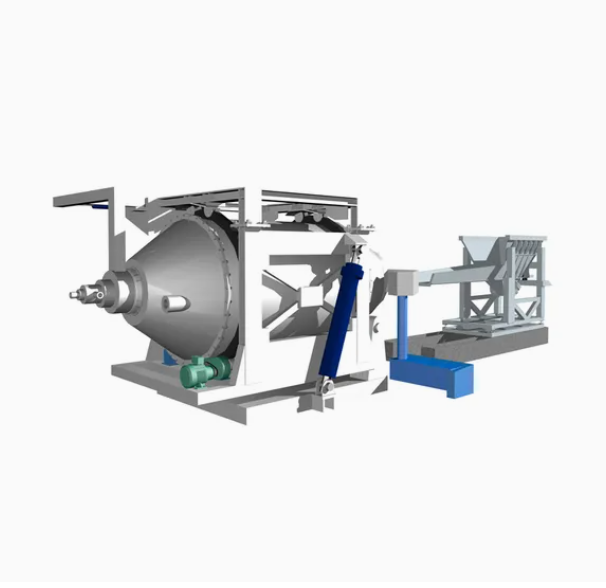
First, the characteristics of the raw materials form the fundamental basis for capacity. The grade of the antimony concentrate directly determines metal recovery rates and unit output. Material particle size affects the reaction surface area and gas permeability within the furnace; particles that are too fine risk being carried away by the airflow, while those that are too coarse prolong reaction times. Furthermore, excessive moisture content not only consumes extra heat and lowers the furnace temperature but can also cause agglomeration, severely hindering production continuity.
Second, equipment parameters define the theoretical limits of capacity. The effective volume of the furnace determines the maximum processing capacity per batch, acting as a hardware-imposed ceiling. The furnace's rotational speed controls the material's residence time, while the inclination angle regulates the rate of material advancement; precise coordination between these two factors is essential to ensure the material reacts fully before being discharged uniformly.
Third, process conditions serve as the core driver for unlocking production capacity. The rates of roasting or reduction reactions depend strictly on the temperature distribution and the control of the furnace atmosphere. Factors such as fuel calorific value, supply stability, and the ratio of combustion-supporting air directly impact thermal efficiency, thereby determining processing capacity per unit of time.
Finally, the level of operational management ensures the consistent realization of production capacity. Feeding rates must be dynamically matched to reaction rates; excessive speed leads to incomplete reactions, while insufficient speed results in wasted capacity. Additionally, measures such as timely slag discharge and efficient dust collection to maintain unobstructed flow, along with regular equipment maintenance to minimize unplanned downtime, are essential for sustaining high output over the long term.
In summary, maximizing the production capacity of an antimony rotary furnace relies on the systematic coordination and precise control of these four dimensions.