



NEWS&EVENTS
Home > News&Events > Company news > How significant is the impact of operational management on the production capacity of antimony rotary furnaces?
In antimony smelting, the rotary furnace serves as a critical pyrometallurgical unit; its output depends not only on design specifications and raw material characteristics but—crucially—on the quality of operational management. Operational management acts as a dynamic variable influencing production capacity, encompassing the following key aspects:
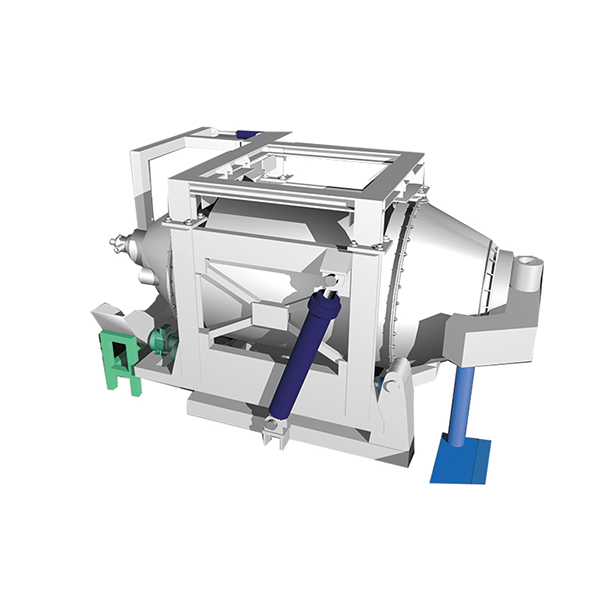
Matching feed rates: The feeding speed must align with the reaction rate inside the furnace; both excessive and insufficient speeds lead to operational issues.
Timely slag discharge and dust collection: Prompt slag removal and dust collection maintain smooth furnace flow, while an efficient dust collection system minimizes metal loss.
Regular maintenance: Routine equipment maintenance ensures stable operation and minimizes downtime.
Personnel training: Strengthening operator training enhances their sensitivity to process parameters and their ability to make adjustments. Implementing real-time monitoring systems to dynamically adjust furnace temperature, atmosphere, and material residence time is essential for stabilizing recovery rates.
In summary, operational management is by no means a secondary factor; rather, it is a core variable determining whether the antimony rotary furnace operates efficiently within its designed capacity range. Through refined feed control, standardized slag discharge and dust collection, institutionalized maintenance, and intelligent operational coordination, enterprises can maximize capacity utilization while reducing energy consumption and production costs per unit. Neglecting operational management can severely compromise actual output, even with advanced hardware; conversely, robust operational management offers the most cost-effective pathway to achieving stable, high-yield, and low-consumption production.